
1. QQQ Stock (Underlying ETF)
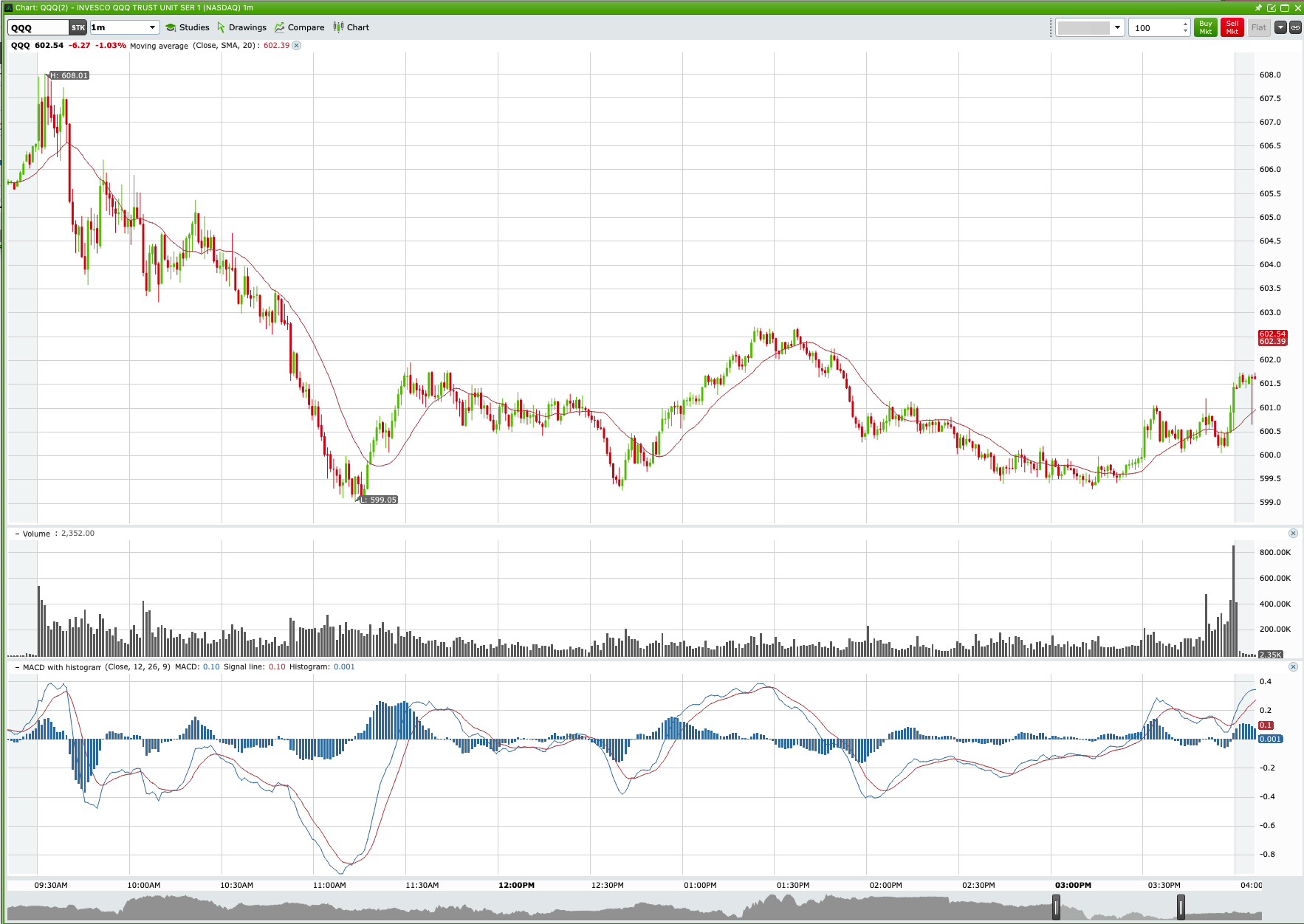
The session opened with significant upward momentum as the QQQ ETF surged from its early morning lows. This initial rally was characterized by a series of bullish candles that propelled the price toward a daily high of approximately $610.35 around 11:00 AM. During this phase, volume spikes confirmed the buying pressure, and the MACD reflected a strong positive trend, suggesting a dominant bullish sentiment in the opening hours.
However, after reaching its peak, the stock entered a sustained and aggressive downtrend. This reversal saw the price break through several minor support levels as it retreated toward the $604 mark by midday. The MACD histogram transitioned into negative territory during this decline, signaling a shift in momentum that caught many early buyers off guard. The increased selling volume during this period indicated a high level of distribution.
In the final hours of trading, the QQQ demonstrated resilience by finding firm support near $604. This level acted as a floor, leading to a late-afternoon recovery. The price trended steadily upward to close the session near $608.75. By the closing bell, the MACD had neutralized, and the narrowing of the moving averages suggested that the intense volatility of the morning had subsided into a more stable, consolidating range.
2. QQQ 609.00 Call Option
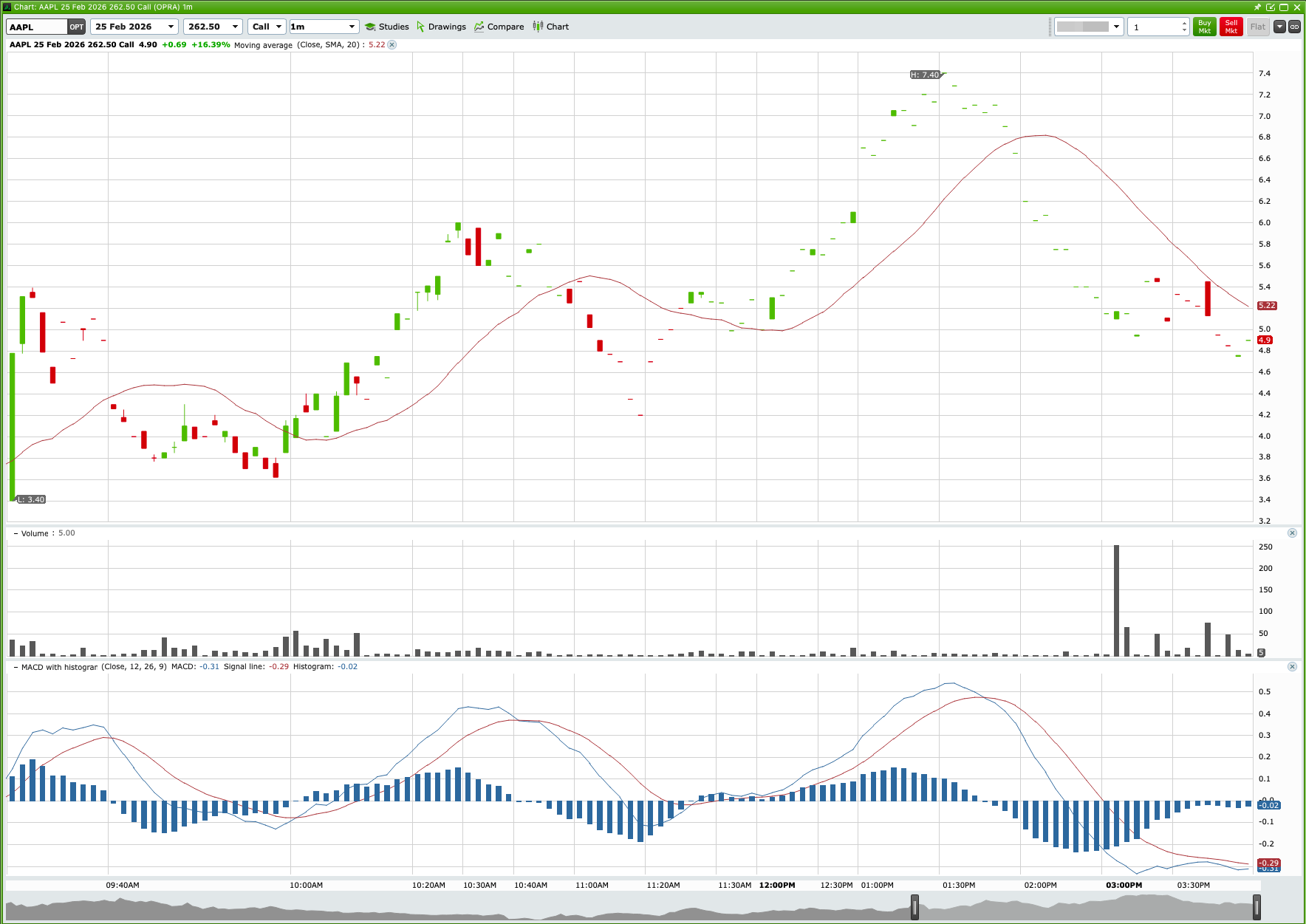
The 609 Call options experienced a dramatic surge in value during the first half of the trading day, directly tracking the underlying ETF's climb toward $610. These contracts reached a peak premium of $4.17, rewarding traders who were positioned for a breakout. At this stage, the options were "In-the-Money" (ITM), and the delta was high, making the option price highly sensitive to every incremental move in the stock.
As the underlying QQQ stock began its midday retreat, the value of these calls eroded rapidly. Because the stock price fell below the $609 strike price, the options moved "Out-of-the-Money" (OTM), leading to an accelerated loss of premium due to the loss of intrinsic value. The MACD on the call chart showed a sharp bearish crossover, mirroring the panic seen in the equity market as the premium dropped toward its session lows.
The late-day recovery in the QQQ ETF provided a much-needed bounce for the 609 Calls. As the stock price climbed back toward the strike price, the calls regained a portion of their lost value, eventually ending the day at $2.94. While the recovery was notable, the overall daily trend for the calls remained influenced by time decay (theta) and the fact that the stock spent a significant portion of the afternoon below the strike price.
3. QQQ 609.00 Put Option
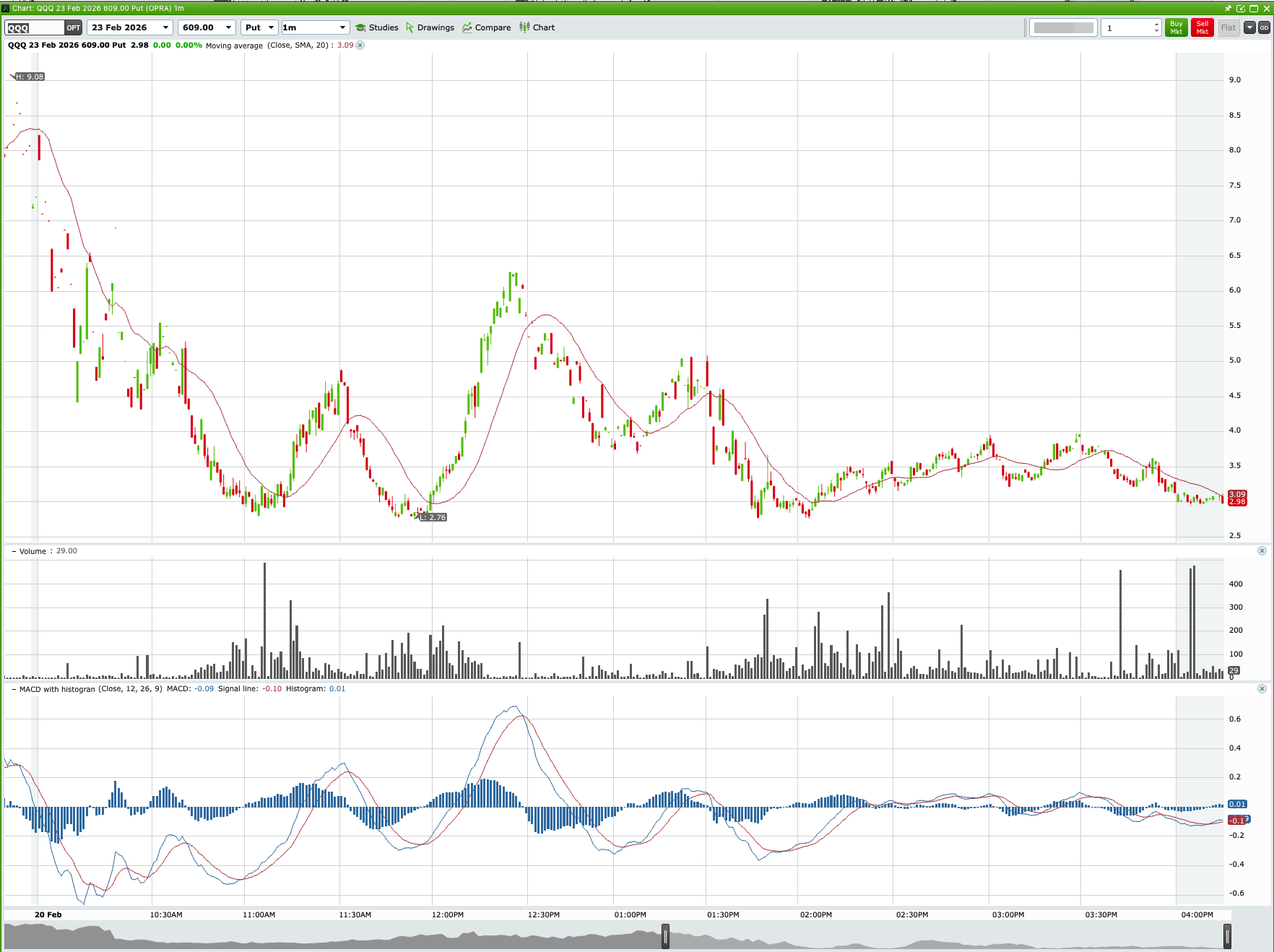
The 609 Put options began the day under heavy pressure as the bullish sentiment in the QQQ forced premiums lower. As the stock moved higher toward $610, the puts became increasingly "Out-of-the-Money," resulting in a session low of $2.76. During this period, the MACD for the puts was deep in negative territory, and volume was relatively thin, reflecting a lack of interest in downside protection while the rally was in progress.
The market dynamics shifted abruptly when the QQQ stock started its midday descent. As the stock price plummeted toward $604, the 609 Puts saw a massive influx of volume and a rapid expansion in premium. This spike represented a surge in demand for hedging and speculative bearish bets. For a brief window, the puts were "In-the-Money," and the MACD histogram turned sharply positive, capturing the peak of the day's bearish momentum.
However, the puts were unable to sustain these gains as the stock found support and began its late-afternoon rally. As the QQQ moved back toward $609, the put premiums bled off, impacted by both the rising stock price and the inevitable effects of intraday theta decay. The contracts eventually closed at $2.98, nearly flat compared to their earlier levels, illustrating how quickly option premiums can vanish when the underlying direction reverses.